

If you have used GT85 for years, you might remember the can proudly mentioning PTFE, and you might have noticed that wording has quietly disappeared. It has led to a genuine, and reasonable, question that keeps coming up: does GT85 still contain PTFE, and if not, what changed? Here is the honest, fully researched answer, along with what it actually means for how the spray performs.

The short answer: no, GT85 no longer contains PTFE
GT85's formula was updated to remove PTFE, and current stock produced under the newer formulation is PTFE-free. This was confirmed directly by the manufacturer in response to customer queries, and it lines up with what many long-term users have independently noticed: newer cans no longer mention PTFE anywhere on the packaging, where older cans did. If you are holding a can right now and want to check which formula it is, the packaging itself is the simplest way to tell; current stock is labelled simply as Multi-Purpose Spray without any PTFE branding.
What is PTFE, and why does it matter?
PTFE, or polytetrafluoroethylene, is a synthetic compound best known as the non-stick coating on cookware, sold under brand names like Teflon. In lubricant sprays, tiny PTFE particles have traditionally been added to reduce friction and add an extra slippery quality to the finish. It is not a dangerous ingredient in the way people sometimes assume, but it does belong to a wider family of chemicals known as PFAS, sometimes referred to as forever chemicals because of how persistent they are in the environment. That broader environmental and regulatory conversation around PFAS is very likely part of why many manufacturers, GT85 included, have been reformulating products to remove PTFE and similar compounds in recent years.
Does the new formula still work as well?
Yes. The core job of GT85, lubricating, cleaning and protecting metal and composite parts while displacing moisture, has not changed. It still leaves a light, non-sticky coating on chains and cables, it still cleans off mud, oil and dirt, and it still helps prevent rust and corrosion on tools, fixings and bike components. Some long-term users online have reported that the newer formula feels slightly different in the first few seconds of use compared to the old PTFE version, but the overwhelming consensus, and GT85's own current product description, is that it remains a genuinely effective all-round lubricant and protectant for the jobs it is designed for.
If you are the kind of rider or DIYer who liked the specific slipperiness that PTFE particles used to add, it is worth knowing this is a formulation choice rather than a quality reduction. GT85 is still positioned as a multi-purpose lubricant, penetrant and water displacer, not a dedicated dry PTFE lubricant, so its strengths have always been in versatility across metal, composite and carbon fibre surfaces rather than in delivering the absolute maximum possible slipperiness for one single application like a pure PTFE dry lube would.
What if my can still says PTFE?
That is completely normal and nothing to worry about. Products are not swapped over instantly across every warehouse and shelf the moment a formula changes; older stock with the previous PTFE formulation continues to be sold through until it runs out. If your can mentions PTFE, it is simply from an earlier production batch, and it is safe to use exactly as intended. There is no safety concern with either version; this is a formulation update rather than a recall or a safety change.
Is GT85 a silicone spray instead?
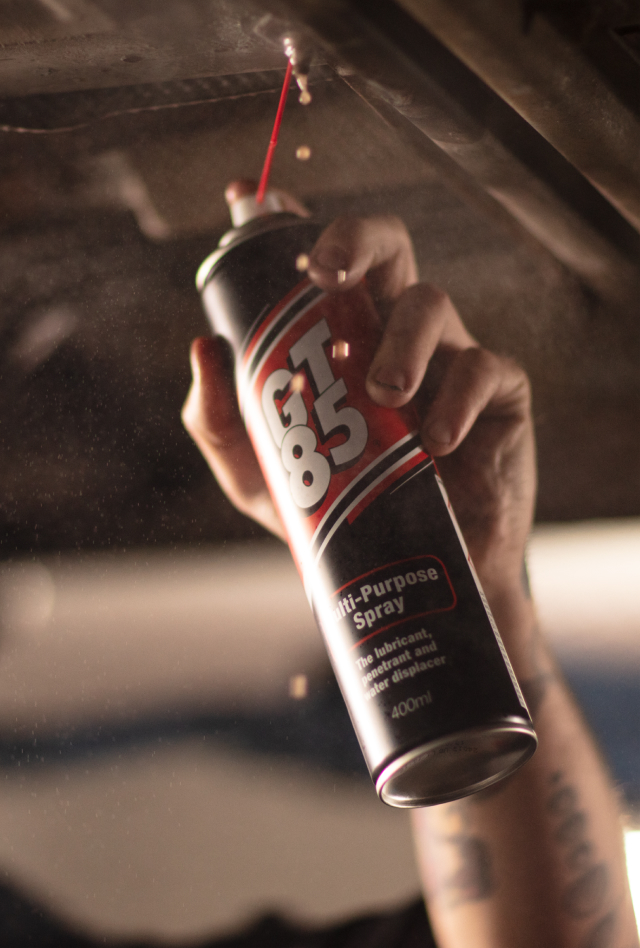
No, and this is another question that often comes up alongside the PTFE one. GT85 is not, and has never been marketed as, a silicone-based spray. It is a multi-purpose lubricant, penetrant and water displacer, formulated to work across a broad range of jobs rather than to deliver the specific properties of a dedicated silicone spray, which is typically chosen for its water resistance on rubber seals, weatherstripping and plastic trim. If your job specifically calls for a silicone spray, for example lubricating a rubber door seal without degrading the rubber, a dedicated silicone product will usually be the better tool, while GT85 remains the stronger all-rounder for metal parts, chains, locks and general workshop use.
Is GT85 petroleum based?
GT85 is formulated as a petroleum-based aerosol lubricant, which is standard for this category of multi-purpose spray. This is part of why it should always be used in a well-ventilated area and kept away from open flames or sources of ignition, as stated on the can and in the safety data sheet. It is worth reading the full safety data sheet if you plan to use it regularly in an enclosed workshop space, simply so you know the correct storage and ventilation guidance.
Where to check for yourself
If you want the primary details rather than taking our word for it, GT85 publishes both a technical data sheet and a safety data sheet, and we link to both directly on our GT85 Multi-Purpose Spray Lubricant 400ml product page, alongside a full breakdown of features, application instructions and a wider FAQ section. It also includes a short video demonstrating GT85 being used across cycling, DIY, mechanical and trade jobs, which is a useful way to see the actual spray pattern and finish in action rather than just reading about it.
Does this change how you should use it?
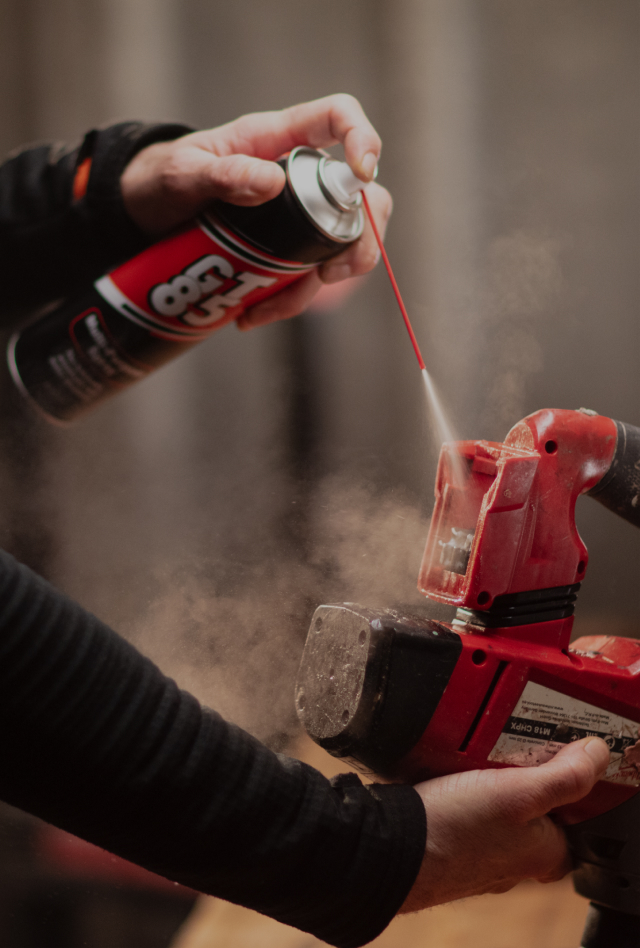
Not really. The application advice for GT85 has not changed alongside the formula update. Shake the can well, spray a light and even coat rather than a heavy soaking application, and wipe away any excess with a clean cloth. For bike chains specifically, apply while turning the pedals backwards so the spray works into the rollers and links evenly, then let it sit for a minute or two before wiping off the outer surface, leaving the lubricant where it is actually needed rather than sitting on the outside of the chain where it will just attract grit.
For locks, hinges and seized fixings, a light spray followed by a short wait before attempting to move the part will generally give better results than trying to force something immediately. And as with any petroleum-based aerosol, avoid spraying directly onto braking surfaces, tyres or disc brake rotors on a bike, since any residue there can affect braking performance regardless of which formula is inside the can.
Why manufacturers are moving away from PFAS generally
It helps to understand this change in a wider context rather than as something unique to GT85. Over the past several years, regulators, environmental groups and manufacturers across many industries have been paying closer attention to PFAS chemicals, the broad family that includes PTFE, because of how slowly they break down in the environment and concerns about their long-term accumulation. This has led to reformulation efforts across everything from cookware and textiles to industrial lubricants, not just aerosol sprays. Seen in that light, GT85 quietly dropping PTFE from its formula fits a pattern that is playing out across the wider consumer goods market, rather than being a one-off change specific to this product.
That broader context is also a useful reminder that a formula change like this is usually a proactive, considered decision rather than a reaction to any single safety incident. Companies that make this kind of change typically do so well ahead of any regulatory requirement, as part of managing their supply chain and long-term product responsibility.
Does the new formula affect how long GT85 keeps working?
One reasonable follow-up question is whether removing PTFE affects the longevity of the lubrication once applied. For everyday jobs like freeing a stiff lock, lubricating a squeaky hinge, cleaning tools or general workshop maintenance, the difference is unlikely to be noticeable in practice. For a bike chain ridden hard in wet, muddy conditions, some riders find they need to reapply slightly more often than they remember doing with the old formula, though this varies a lot depending on riding conditions, chain type and how thoroughly the chain was cleaned before application. If you are doing long-distance or all-weather riding and want maximum time between reapplications, pairing GT85's cleaning and general protection with a dedicated long-life chain wax for the actual running surface is a sensible approach that plenty of experienced cyclists already use.
Buying with confidence either way
If you are shopping for GT85 and specifically want to confirm which formula you are getting, checking the can's wording for any mention of PTFE is the most reliable way to tell, since GT85 has not attached a separate product name or model number to distinguish the two formulas from each other. Either version will perform the core job well, so this is really a matter of curiosity and informed use rather than something that should hold up a purchase.
The bottom line
GT85's PTFE removal is a real, confirmed formulation change rather than a rumour, and it reflects a broader industry move away from PFAS-related compounds. The spray still does the same core job it always has: lubricating, cleaning and protecting metal and composite parts while displacing moisture, and it remains one of the most widely used sprays among UK cyclists, DIYers and tradespeople for exactly that reason. Whether your can is old formula or new, you are getting a genuinely capable multi-purpose spray; the only real change is one specific ingredient that has quietly been left out.
