


If you have ever stood in front of a shelf of spray lubricants trying to decide between GT85 and WD-40, you are not alone. It is one of the most searched questions about either product, and the honest answer is a little more nuanced than a simple yes or no. Both are multi-purpose sprays, both come from the same parent company, and both do a similar core job, but they are not identical products, and knowing where they differ will help you pick the right can for the job in front of you.

Are GT85 and WD-40 the same product?
No, they are not the same product, even though they are both made by WD-40 Company. GT85 was launched in 1985 as a dedicated cycling and light mechanical maintenance spray, which is where the "85" in its name comes from. It carries the tried and tested since '85 tagline on its can to this day. WD-40 Multi-Use Product, on the other hand, is the company's original general-purpose formula, first developed decades earlier for industrial and household use before becoming a household name in its own right.
So while they sit under the same corporate umbrella and share a similar mission of lubricating, cleaning and protecting, they are formulated and marketed differently. GT85 has built its reputation specifically around cyclists, DIYers, mechanics and trade professionals, with usage instructions that speak directly to chains, cables, derailleurs and workshop tools. WD-40 Multi-Use leans into the widest possible range of household and garage jobs, from squeaky hinges to stuck zips.
What actually sets GT85 apart
The clearest difference shows up on a bike. GT85 has spent years being refined for chain and cable maintenance, and its finish is noticeably lighter and less oily than many all-purpose sprays. That matters on a drivetrain, because a heavy, sticky lubricant attracts road grit and grime, which then grinds away at your chain and cassette every time you pedal. GT85's lighter touch is designed to lubricate without turning your chain into a dirt magnet.
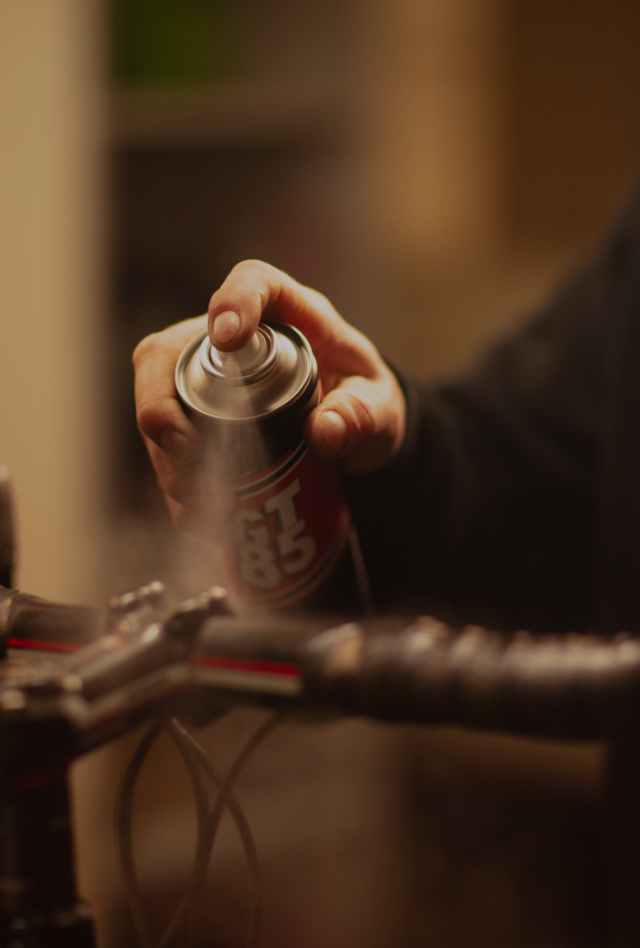
It also carries a distinctive fresh scent rather than a heavy petroleum smell, which is a small detail but one that regular users notice, especially if you are working on a bike indoors or in a small shed. And crucially, GT85 is safe to use on carbon fibre frames and composite parts, which matters a great deal if you are riding anything built in the last couple of decades.
Which one should you actually reach for?
If your priority is bike maintenance, chain lubrication, cable care or keeping a workshop's worth of tools, locks and hinges moving smoothly, GT85 is the more purpose-built choice, and it is why so many cyclists keep a can in the shed specifically for that job. If you need something for a broader range of household repairs where bike-specific formulation is not the priority, WD-40 Multi-Use is the more general option.
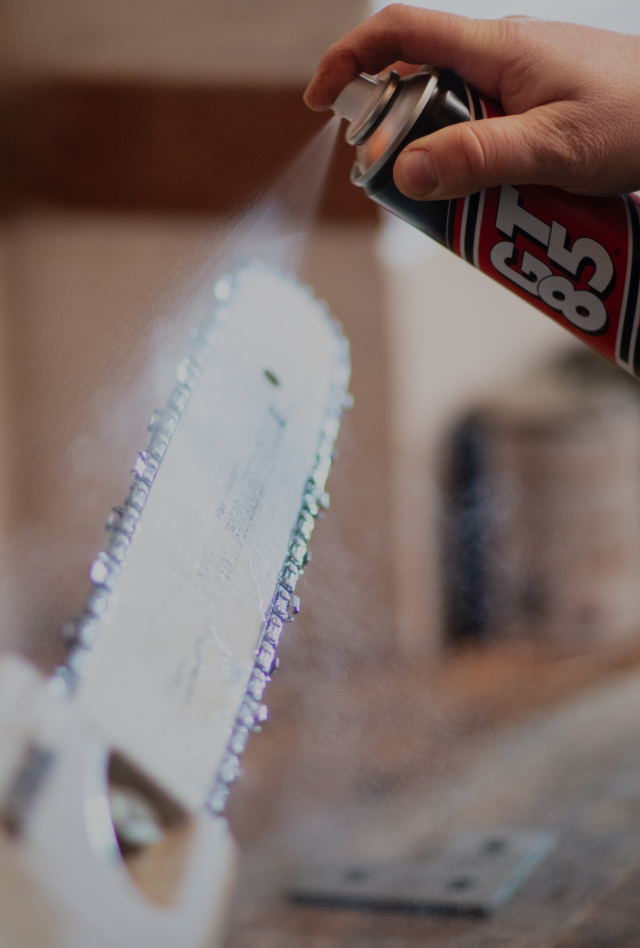
In practice, plenty of people keep both, using GT85 for anything bike or precision-related and reaching for a general spray for everything else. There is no wrong answer here so long as you are matching the product to the job, and both will lubricate, clean and displace moisture effectively within their intended use.
A quick word on GT85's formula
One thing worth knowing if you last bought a can a few years ago: GT85's formula has been updated, and it no longer contains PTFE. If your can still lists PTFE on the label, it is simply from an earlier batch and is perfectly fine to use as normal. The spray still lubricates, cleans and protects in exactly the way it always has; only the specific ingredient list has changed. We cover this in more detail in our full breakdown of whether GT85 still contains PTFE, if you want the complete picture.
Using GT85 for cycling, DIY and workshop jobs
Whichever spray you choose, technique matters as much as the product itself. For a bike chain, spray a light, even coat directly onto the chain while turning the pedals backwards, or spray onto a rag first and wipe it along the chain for a cleaner, less messy application. For cables, spray directly into the gap between the inner and outer housing to lubricate and push out any trapped moisture. For derailleurs, a light wipe with a GT85-soaked rag keeps the pivot points moving freely and adds a protective shine.
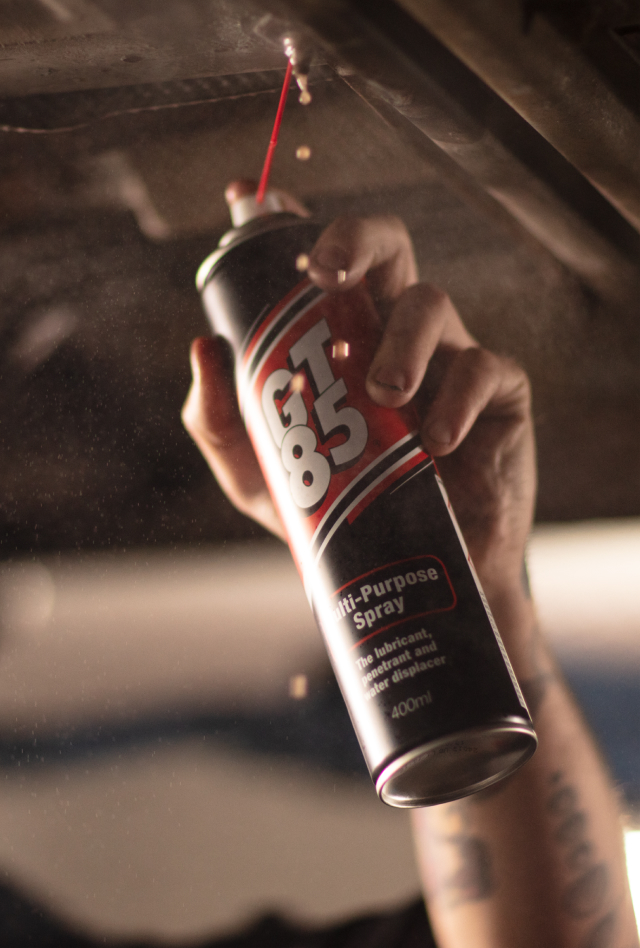
Around the house and workshop, GT85 is equally at home on stiff locks, squeaky hinges, seized garden tools and rusted nuts and bolts. Give it a minute to work into corroded fittings before you try to move them, and always wipe away excess spray with a clean cloth afterwards so surfaces are not left tacky.
If you want the full specification, application notes and a proper FAQ covering everything from PTFE to bike chain use, our GT85 Multi-Purpose Spray Lubricant 400ml product page has the complete details, including the technical and safety data sheets and a short video showing GT85 in action across cycling, DIY, mechanic and trade jobs.
Common mix-ups worth clearing up
Because GT85 and WD-40 share a parent company and a similar can shape and spray pattern, a few myths tend to circulate. One is that GT85 is "just WD-40 with a bike sticker on it." That is not accurate; the two have separate formulations, separate product development histories, and separate target uses, even if both fall under the same umbrella of multi-purpose lubricant and water displacer sprays. Another common question is whether GT85 is owned by WD-40, and the answer is straightforwardly yes: GT85 is a WD-40 Company brand, which is exactly why the two are so often compared in the first place.
A related question that comes up often is whether GT85 is a silicone spray. It is not a pure silicone lubricant; it is a multi-purpose formula designed to lubricate, clean and displace moisture across a wide range of surfaces, which is part of why it performs differently to a dedicated silicone-only product on jobs like chain maintenance.
What cyclists specifically say about the difference
Ask around any cycling forum and you will find plenty of riders with strong opinions on chain lubrication, and GT85 tends to come up as a go-to for general chain and cable care, particularly for riders who want one can that covers cleaning, lubricating and protecting without needing a separate degreaser and a separate wax-based chain lube for every ride. It is worth noting that for very wet, muddy conditions or long-distance touring, some cyclists prefer to follow up with a dedicated wet-weather chain lubricant for extra staying power between applications, since GT85's lighter finish, while excellent for general use, will not outlast a thick wax-based lube in the worst weather.
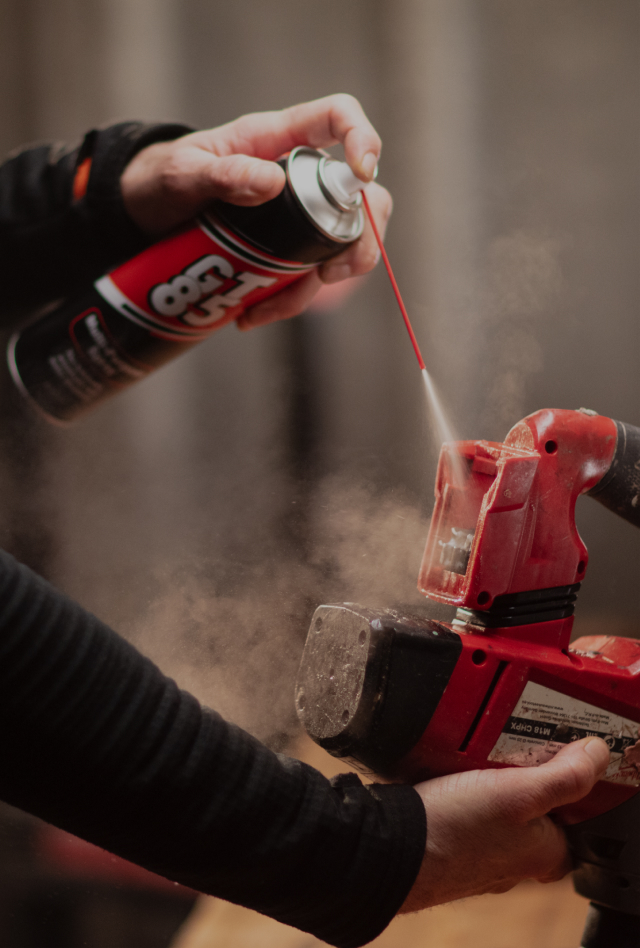
For trade and workshop use, the comparison often comes down to habit rather than hard performance differences. Plenty of tradespeople grew up with WD-40 in the toolbox for absolutely everything, from freeing a seized bolt to displacing water from a damp switch, and see no reason to change. Others who work more with bikes, precision tools or composite materials have gravitated to GT85 specifically because of its carbon-safe formulation and lighter residue. Neither habit is wrong; it usually comes down to what is already sitting on the shelf and what kind of jobs come up most often.
Storage, shelf life and getting the most from either can
Whichever spray you choose, a few basics apply to both. Store the can upright in a cool, dry place away from direct sunlight and heat sources, since aerosol cans are pressurised and can be affected by extreme temperatures. Shake well before every use to make sure the contents are properly mixed, and use the directional straw for precision work like getting into a lock mechanism or a tight derailleur pivot, switching to a wider fan spray for general cleaning and protection over a larger area.
If a can seems to spray weakly or inconsistently, check that the nozzle is not blocked with dried residue from a previous use; a quick wipe or a spray of the nozzle itself with the can inverted can often clear this. Both products are designed to be used little and often rather than in a single heavy application, so a light, even coat reapplied periodically will generally outperform one thick, saturating spray.
The bottom line
GT85 and WD-40 are cousins rather than twins. They come from the same company and share a similar spirit, but GT85's cycling and light-mechanical focus, its lighter finish and its carbon-safe formulation make it the more specialised tool for bike chains, cables, locks and workshop maintenance, while WD-40 Multi-Use remains the broader household all-rounder. Neither is objectively better; they are simply built for slightly different jobs, and understanding that difference is the real key to getting the best result from either can.
