


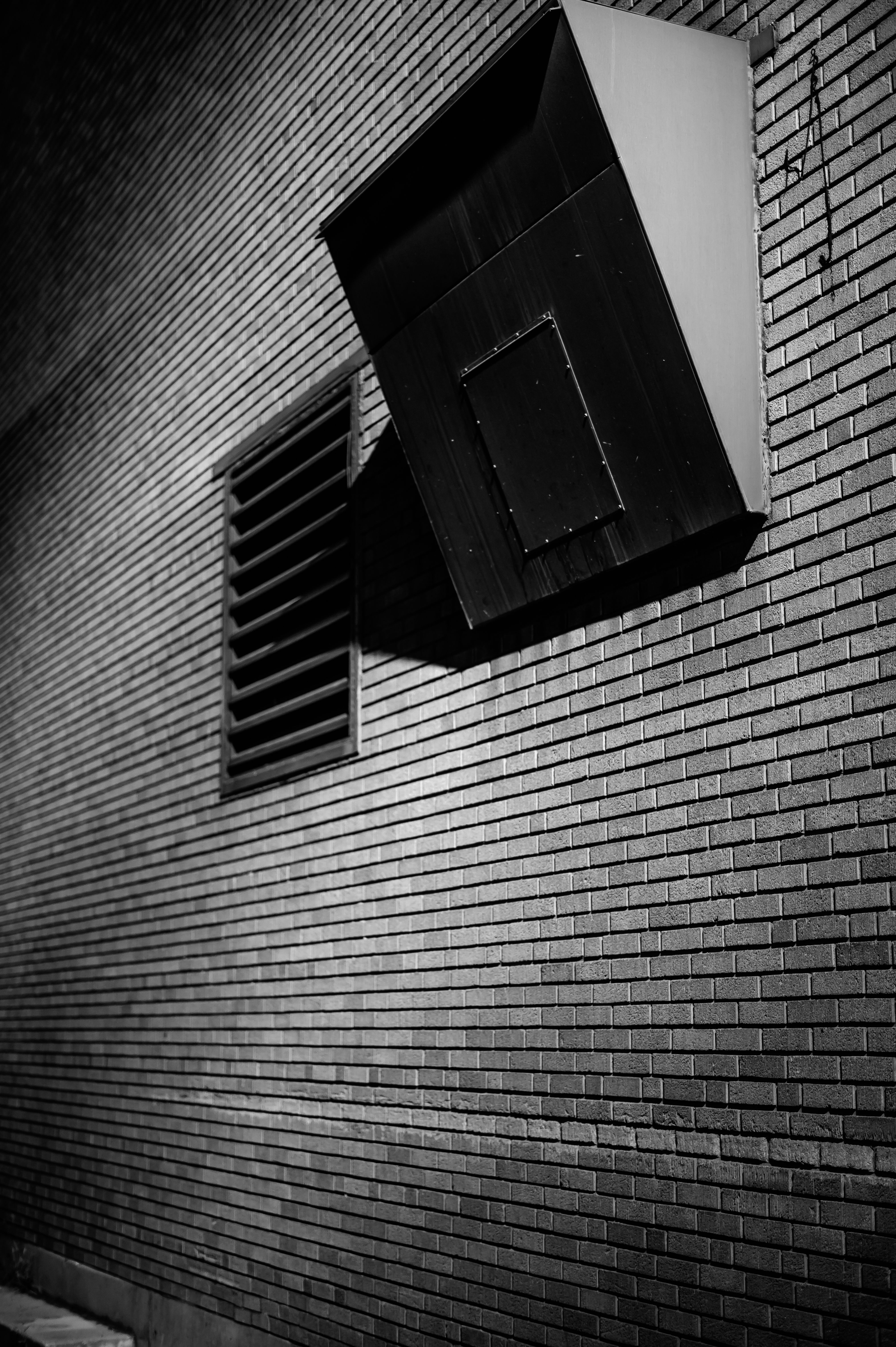
If you have ever noticed a small grille with angled slats set into an outside wall, a door, or the underside of a roof overhang, you have already met a louvre vent. This guide explains what a louvre vent is, how the angled slats work, which materials suit which job, and where you will find them, whether you are asking why is there a louvre vent on my wall, or working out what is a louvre before buying a replacement.
What Is a Louvre Vent?
A louvre vent, sometimes spelled louver, is a ventilation cover built from a series of angled slats fixed inside a frame or grille. The assembly, often called a louvre grille or louvred ventilator, is fitted into an opening in a wall, a door, or a length of ducting. Unlike a hole simply covered with mesh, the slats sit at a slight downward angle, typically between 30 and 45 degrees, letting the vent do two jobs at once: air moves freely in both directions, while rain sheds off and debris is kept out of the void behind it.
People often ask what is a louvre vent when they spot one low down on an exterior wall for the first time. In most cases it is a background ventilator, quietly keeping a suspended timber floor, a roof void, or a room supplied with fresh air. Because the design is simple and effective, louvre vents have been used in buildings for centuries, and the same principle is still standard today.
How Do the Angled Slats Work?
The question of how do louvre vents work comes down to that angled slat design. Each slat overlaps the one below it slightly, forming narrow gaps that run across the vent. Air passes through these gaps with little resistance, moving in or out depending on pressure on either side. Water behaves differently: wind driven rain hits the sloped top surface of each slat and runs down and off, rather than finding a straight path through, so very little moisture reaches the inside.
This is the key difference between a louvred vent and a plain grille or flat mesh cover, which lets rain blow straight through in bad weather. The slats also create a barrier against birds, larger insects, and general debris, though they do not stop everything. A fixed flyscreen, riveted into the frame, adds a fine mesh layer that can be wiped clean but not removed, while a removable flyscreen clips out so it can be taken away and washed properly. Neither type stops mice or other rodents, since the mesh used for flies is far too coarse, so a dedicated fine rodent mesh needs fitting separately if that is a concern.
Materials Compared: Plastic, Aluminium and More
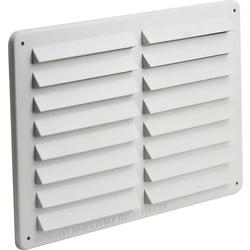
Louvre vents are made from a handful of materials, and the right choice depends on where the vent is going. White or brown PVC plastic is the most common option for general background ventilation: lightweight, easy to fit, and it will never rust. The Securit white plastic louvre vent 9 x 6 suits a standard airbrick position, and where hygiene matters more, the Securit plastic louvre vent with removable flyscreen in 9 x 3 lets you take the mesh out for a proper clean. Plastic is not suitable near a gas appliance flue, since it can soften or distort in the heat.
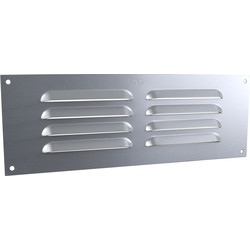
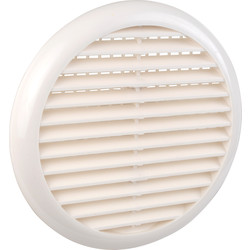
Aluminium louvre vents are the stronger, more weather resistant alternative. An aluminium louvre keeps its shape under UV exposure and temperature swings far better than plastic, resists corrosion, and is rated for use with gas appliances since it can sit close to flue heat. The Securit aluminium louvre vent 9 x 6 gives a boiler cupboard the airflow it needs without the risk plastic carries near a heat source. For discreet ventilation on a soffit or fascia, circular louvred vents are used instead of the rectangular airbrick shape, and the Securit circular louvered vent 165mm in white is designed to blend into the roofline rather than stand out.
There is also a separate category: louvred grilles fitted with a spigot, connecting onto round or square ducting rather than sitting flush in a wall, commonly used on extractor fan outlets. The Securlec inlet/outlet fixed louvre grille in grey, 150mm is a typical example.
Common Uses Around the Home
The most familiar job for a louvre vent is background ventilation of a suspended timber floor, the construction found in most older UK homes. A row of vents, sometimes called airvents locally, sits just above ground level along the wall base, letting air circulate under the floor and carry moisture away before it settles. Blocked or missing vents are a leading cause of condensation, mould, musty smells, and eventually rot in the floor joists.
Beyond floor voids, a plaster vent or door vent performs a similar job indoors, allowing air to move between rooms, which matters where a gas appliance needs a steady air supply to burn safely. A louvre vent cover is also used on boiler cupboards, internal bathroom and kitchen doors, and as the outlet cover for extractor fans venting through an external wall. On roofs, natural ventilation louvres set into soffit boards let moist air escape the loft, cutting condensation risk. A black louvre vent has also become popular for blending with darker frames or rendered walls, though functionally it works the same as any other louvred vent.
Sizing Basics and Free Air Space
When choosing or replacing a louvre vent, the outer dimensions are only part of the story. What matters for performance is the free air space, the real open area air can pass through once the slats and any flyscreen are accounted for. Free air space is always smaller than the outer size of the vent, measured in square millimetres. This is the figure referred to in UK guidance, not the vent's outer frame size, so check it before buying rather than assuming a bigger looking vent performs better.
Standard UK vent sizes are based on brick coursing, commonly sold as 9 x 3 inches, 9 x 6 inches, and 9 x 9 inches, matching one, two, or three courses of brickwork. Approved Document C, covering ventilation of suspended timber floors, sets a minimum requirement of at least 1500 square millimetres of free air space per metre run of external wall, or 500 square millimetres per square metre of floor area, whichever is greater, with vents on at least two opposite sides of the building for cross ventilation. A larger vent such as the Securit plastic louvre vent in brown with a fixed flyscreen, 9 x 9 gives more free air space per fitting, reducing the vents needed along a wall run.
Fitting and Replacing a Louvre Vent
Swapping an old, cracked, or discoloured vent is usually simple. The old cover is unscrewed or unclipped, and the new vent is fitted straight back into the same fixing holes, matching the size so the opening stays fully covered. Fitting a louvre vent into a brand new opening takes more work: the mortar joint is chiselled or drilled away, the vent is bedded into fresh mortar and tapped flush with the brickwork, and the edges are pointed to match the existing finish. Match the free air space of the replacement to what building regulations require, rather than simply matching the old vent's outer size. Our louvre vent collection covers plastic, aluminium, and circular options in one place.

Frequently Asked Questions
Why is there a louvre vent on my wall?
It is almost certainly there to ventilate a suspended timber floor or an internal room. Blocking it can trap moisture and lead to condensation, mould, and joist damage over time, so it is best left in place and replaced like for like if damaged.
What is the difference between a louvre vent and a standard air vent?
A standard flat grille has straight openings that let rain blow straight through in bad weather. A louvre vent uses angled slats instead, so air still passes in both directions while rain is deflected away.
Can I use a plastic louvre vent near a gas boiler?
No. Plastic vents are not rated for use near gas appliance flues because the material can be affected by heat. An aluminium louvre vent should be used instead close to a boiler or gas fire flue.
Do louvre vents stop mice getting in?
No. The angled slats and standard flyscreen mesh keep out rain, leaves, and flying insects, not rodents. A dedicated fine rodent mesh needs fitting behind or in place of the standard flyscreen if mice are a concern.
A louvre vent might be a small fitting, but it plays a genuinely important role in keeping a home dry and free from the damp and mould that come with poor airflow. Understanding how the slats work, choosing the right material, and matching the free air space to your needs will help make sure whichever vent you choose keeps doing that job for years to come.
