

If your tea towels are thin, stained and never quite dry your dishes properly, you're not alone. A good tea towel does more work in a UK kitchen than almost any other item you own. It dries dishes, lines bread, lifts hot pans and wipes down surfaces, and yet it's usually the last thing anyone thinks about when they're shopping. This guide covers what actually makes good quality tea towels, the difference between terry, woven and waffle finishes, how many you really need, and an honest look at the range we stock, so you can pick the right tea towel set for your kitchen.
What actually makes a good tea towel
Not all tea towels are built the same, and the differences show up fast once you're using one every day. There are four things worth checking before you buy.
Absorbency
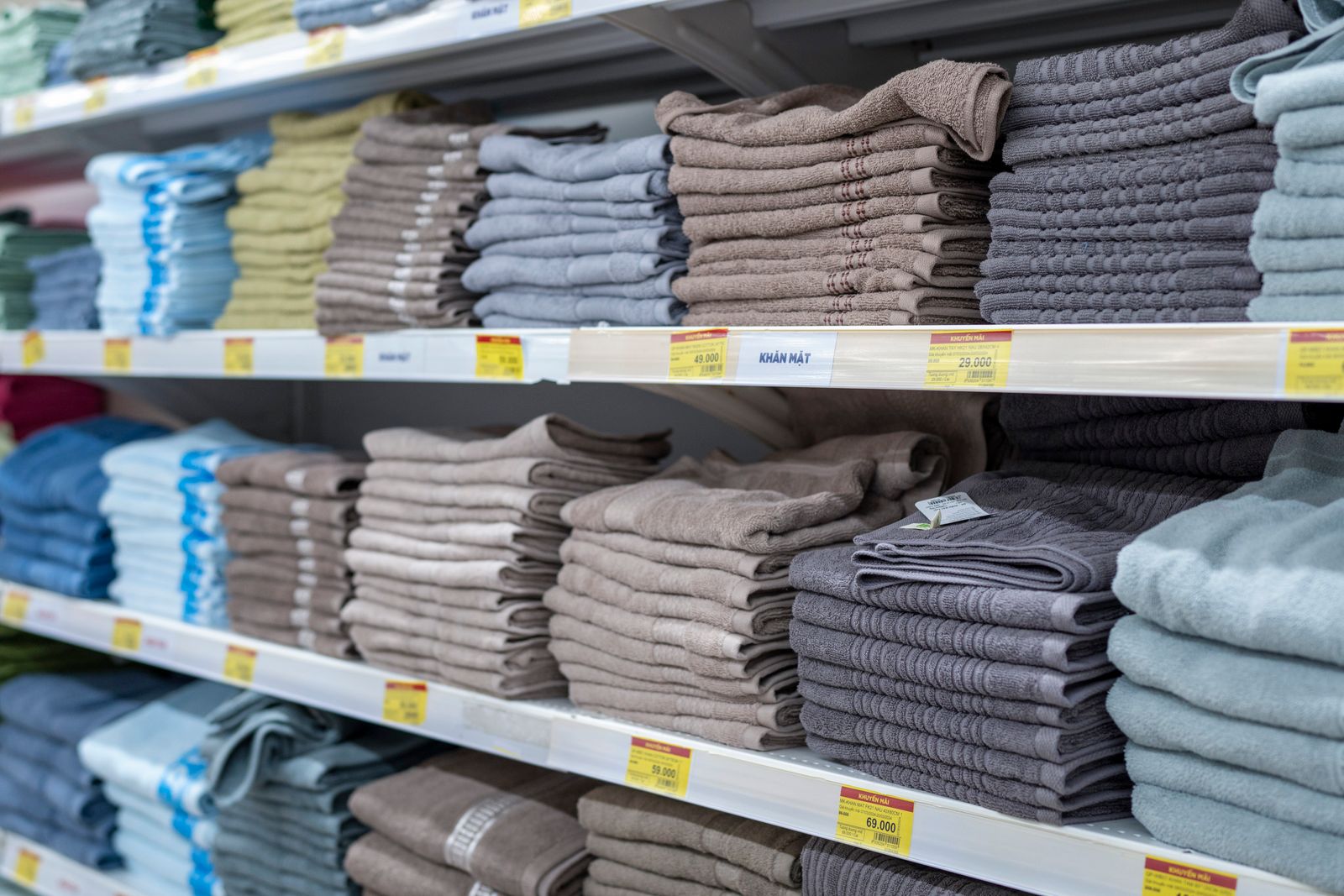
This is the whole point of a tea towel, so it's the first thing to get right. Thin, loosely woven cotton looks fine on the shelf but goes damp and useless within seconds of drying a plate. Thick tea towels with a denser weave or a terry (looped) construction hold far more water and keep working through a full sink of washing-up rather than needing to be swapped halfway through.
Material and weave
Cotton is the standard for a reason. Cotton tea towels absorb well, wash well, and don't leave lint on glassware the way some synthetic blends do. Within cotton, the weave changes how the towel behaves. A tighter weave gives a smoother finish that's good for glassware and general wiping, while a looser or looped weave soaks up more liquid faster.
Size
Large tea towels simply do more per use. A generous size means you can dry a big pan or a full stack of plates without swapping to a dry towel halfway through, and they double more comfortably as an oven cloth or a liner for proving bread dough.
Durability through repeated washing
A tea towel gets washed far more often than almost anything else in the house. Cheap, thin cotton thins out further and starts to fray within a few months, while denser, well-made cotton keeps its shape and absorbency through hundreds of washes. That durability is really what separates good tea towels from ones you'll be replacing every few weeks.
Terry vs woven vs waffle-finish tea towels
You'll see all three types mentioned when shopping for tea towels UK-wide, and each suits a slightly different job.
Terry tea towels have a looped pile, similar to a bath towel, which makes them the most absorbent option by some distance. They're the best choice for heavy-duty jobs such as big pans, roasting trays and mopping up spills, essentially anywhere you need maximum liquid pickup in one pass.
Woven (flat) tea towels have a smoother, tighter finish. They're less bulky than terry, dry faster themselves between uses, and give a cleaner result on glasses and cutlery where you don't want loose fibres left behind. Most printed and patterned tea towels use this weave, so it's also where you'll find the more decorative designs.
Waffle-finish tea towels have a raised, grid-textured surface. The extra surface area helps them absorb well while still drying out quickly between uses, which makes them a solid middle ground if you want one towel that handles most jobs reasonably well without being as bulky as terry.
In practice, most households do best with a mix of both types. A couple of terry towels can handle the heavy jobs, with some woven ones in rotation for lighter drying and general kitchen use.
How many tea towels do you actually need?
More than most people think. A tea towel should really be changed daily, or even more often if it's being used for raw food prep, hot pans and general wiping all in one day. For a typical household, that means:
- 2-3 in daily use, hanging by the sink or oven
- 2-3 in the wash or drying, so you're never caught short on laundry day
- 1-2 spare for messier jobs, spills, or guests
That adds up to six or more tea towels in circulation at any time. It's exactly why buying a set of tea towels or a multipack makes more sense than picking up one or two at a time. Not only is it more economical, but it also means you've always got a dry, clean one to hand rather than reaching for a damp towel that's already done three jobs that day.
The tea towel range at Essentials Fix
We stock a genuine spread of tea towels, from heavy-duty terry through to patterned designer sets, so here's an honest run-through of what's in the range and what each one actually suits.
Ottoman Jumbo Terry Tea Towel
If drying is the main job you need a tea towel for, this is the one to reach for. The Ottoman Jumbo Terry Tea Towel is a looped terry weave in a generously oversized cut, so it soaks up far more than a standard towel before it needs wringing out or swapping. It's built for everyday drying of pans, plates and glassware, and its size makes it just as useful as an oven cloth or spill mop when needed.
Ottoman Tea Towels Pack 8
For stocking up a full rotation without thinking about it again for months, the Ottoman Tea Towels Pack 8 is the practical answer. Eight towels in one pack covers the daily-use, in-the-wash and spare categories in one go, which is exactly the kind of buffer a busy kitchen needs. It's a sensible option if you're setting up a new kitchen or simply tired of running out of clean towels mid-week.
Squeaky Clean Rice Weave Tea Towels x3
The Squeaky Clean Rice Weave Tea Towels x3 come in assorted colours and offer solid everyday performance from a textured rice weave finish. They're a good-value option if you want a few towels in the mix for lighter jobs, such as glassware, worktops and general wiping, without committing to a full 8-pack.
Price & Kensington Woodland Tea Towels Set of 3
Not every tea towel needs to be purely functional. The Price & Kensington Woodland Tea Towels Set of 3 brings a patterned, designer look to the kitchen, with a woodland print across a set of three. They suit anyone who wants their tea towels to look intentional hanging by the oven rather than purely utilitarian, while still performing as a proper woven cotton towel day to day.
Royal Markets Tea Towels Roll 3
For a straightforward, no-fuss everyday option, the Royal Markets Tea Towels Roll 3 does the job well. It's a practical set of three that works as reliable daily-use cotton towels. Nothing fancy, just good quality tea towels that get the drying done.

Keeping tea towels tidy and letting them dry properly
A tea towel left balled up on the counter or stuffed over an oven door handle doesn't dry between uses, and a damp towel stops being an absorbent towel fairly quickly. A proper holder or set of clips keeps towels hung out flat so they actually dry and stay fresh between washes.
The Chef Aid 4-Hole Tea Towel Holder keeps up to four towels hung separately and within reach, which suits a household running more than one towel at a time. That's handy if you're following the daily rotation described above. For a simpler fix, the Chef Aid Towel Clips 5 Pack let you clip a towel to an oven door, rail or drawer handle so it hangs open rather than folded over on itself.
Choosing the right set for your kitchen
If you only take one thing from this guide, it's that thickness and weave matter more than how a tea towel looks on the shelf. For heavy everyday drying, go for terry. For a smarter look or lighter jobs, a woven or patterned set works well. And for most households, buying in a multipack rather than one or two at a time is simply the more practical choice.
You can browse the whole range, including sizes, colours and materials, in our tea towel collection.
FAQs
How many tea towels should I own?
Six or more is realistic for most households. That typically means a few in daily use, a few in the wash, and a spare or two for messier jobs. This is why a set or multipack tends to work out better than buying single towels.
Are terry tea towels better than woven ones?
Terry towels are more absorbent and better for heavy drying, while woven towels are smoother, lighter and leave less lint on glassware. Most kitchens benefit from having both types in rotation rather than relying on just one.
How often should tea towels be washed?
Daily, or as soon as one feels damp or has been used for raw food prep. Rotating through a full set means you're never stuck reaching for a towel that's already done a full day's work.
