


Every decorator reaches the same moment on every job. The roller has covered the big flat areas quickly, and now there is a thin strip left where the wall meets the ceiling, the skirting board, or a window and door frame. That strip has to be painted by hand, in a straight confident line, with no roller in sight. Decorators call this "cutting in," and the brush you choose for it matters more than most people realise. A good purdy cutting in brush can turn a nervous, wobbly edge into a crisp line you would swear was masked off. This guide covers what cutting in involves, why brush shape and bristle type change the result, and which purdy brush fits which job, from sash windows to skirting boards to the tightest corners in the house.
What Does Cutting In Mean?
Cutting in is the technique of painting a straight, controlled edge by hand wherever a roller cannot safely reach. Think of the line where a white ceiling meets a coloured wall, the narrow gap behind a radiator, or the trim around a window that needs to stay sharp while the surrounding wall gets a fresh coat. Rollers are built for coverage, not precision, so they cannot hold a clean line against tape, plaster, or wood. That job falls to a brush, and it rewards good tools. A worn, floppy brush with splayed bristles will wander off the line no matter how steady your hand is, while the right purdy paint brush holds its edge and lets you paint with confidence rather than constantly correcting drips and stray marks.
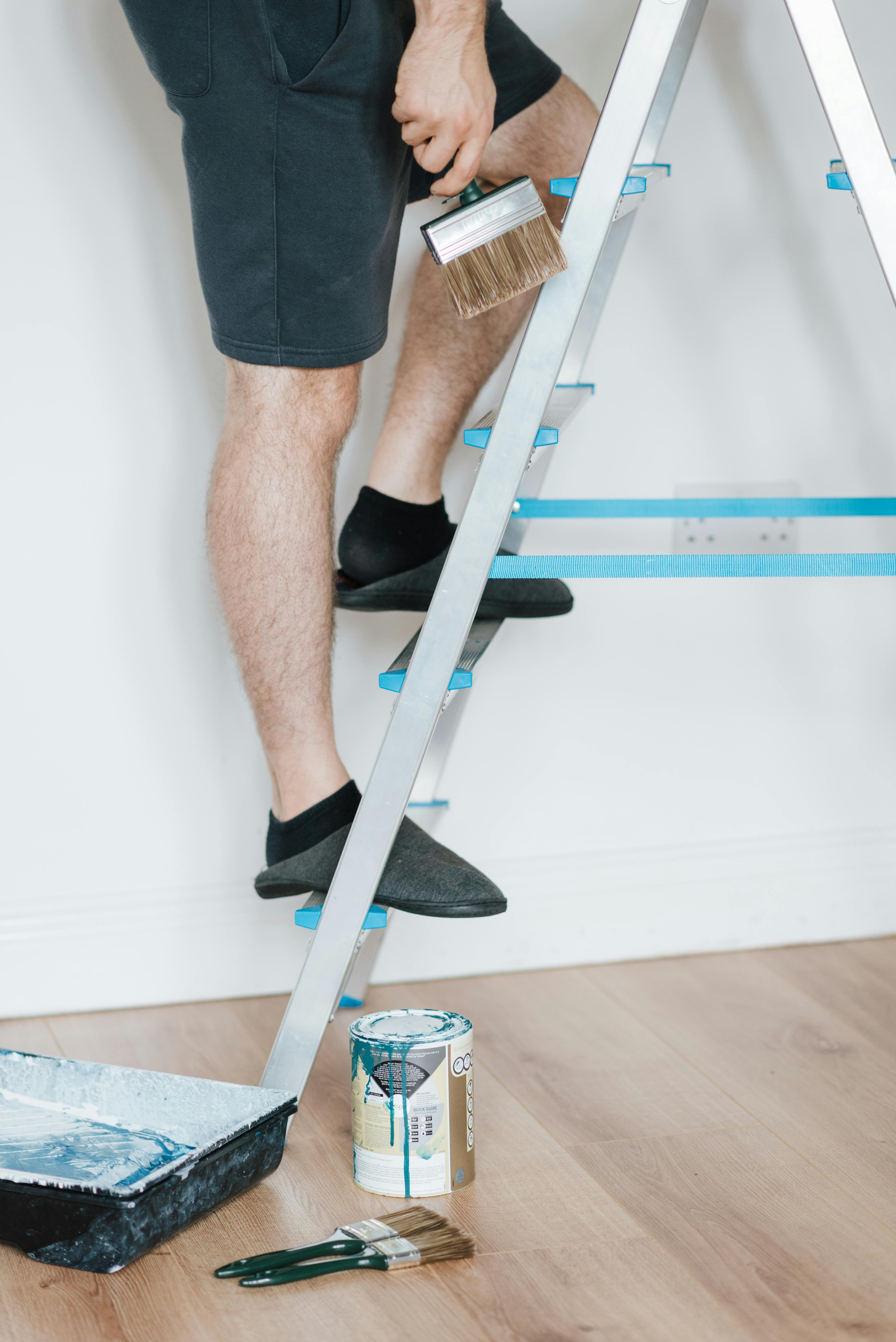
Angled vs Flat Brushes for Cutting In
Not every brush is built the same way, and the differences are not just cosmetic. Three things decide how a brush behaves when you are cutting in: the shape of the bristle tip, the stiffness of the filament, and the length of the handle.
Angled Sash Brushes
An angled brush has bristles cut on a diagonal, so the tip comes to a fine point on one side. That point lets you follow a line without twisting your wrist into an awkward position. Angled brushes are the classic choice for sash windows, glazing bars, and any edge where you need to see exactly where the bristle tip is landing.
Flat Trim Brushes
A flat brush has a square, even edge across the whole head. It holds more paint and covers a wider strip in one pass, which makes it a strong choice for long, uninterrupted runs such as skirting boards and door frames, where speed and coverage matter more than a precise point.
Filament, Ferrule, and Handle Length
Filament stiffness affects how much the bristles flex under pressure. Stiffer filaments hold a sharper edge for fine detail, while softer blends lay down paint more smoothly over a slightly wider area. The ferrule, the metal band holding the bristles to the handle, shapes how the brush loads and releases paint, and a well formed one stops bristles splaying apart as it wears. Handle length matters too: longer gives better reach on tall walls and windows, while shorter gives more manoeuvrability in a cupboard, behind a toilet, or anywhere a full length handle will not fit.
The Purdy Dale XL Elite for Sash Windows and Trim

The Purdy Dale XL Elite 1 inch is the classic angular sash brush, and it is the brush most decorators reach for first when the question "what is the best purdy paint brush for cutting in" comes up. Its angled tip is shaped for glazing bars, sash windows, and any trim where the line needs to be sharp on both sides. The bristle blend holds its point through a full day of use rather than fanning out after a few hours, which matters when working around every window in a house. Sizing up with the Purdy Dale XL Elite 1.5 inch gives more coverage for wider frames and architrave without losing precision, while the Purdy Dale XL Elite 2 inch handles broader trim and door casing where you still want an angled edge but need to move faster. As a genuine purdy cutting in brush, the Dale range is built around one job and does it very well.
The Purdy Sprig XL Elite for Skirting and Frames
Skirting boards present a different challenge to a window frame. The line you are cutting is usually long and low, often running the full length of a room, and you are more often braced at an awkward angle than standing comfortably at eye level. This is where a flat trim brush earns its place. The Purdy Sprig XL Elite 1.5 inch gives a compact flat head that is easy to control along a skirting board or narrow architrave, loading enough paint to keep a wet edge moving without constantly dipping back into the tin. Step up to the Purdy Sprig XL Elite 2 inch for door frames and wider skirting, or the Purdy Sprig XL Elite 2.5 inch to cover more skirting length per stroke in a larger room. The flat ferrule spreads paint evenly across the bristle, so long straight runs stay consistent rather than showing lap marks where you paused to reload.

The Purdy Cub XL Angled for Tight Corners

Some spots in a house simply will not accept a full length brush handle. Behind a toilet cistern, inside a shallow airing cupboard, or squeezed between a radiator and the wall are places where a standard handle gets in your own way before the bristles even touch the surface. The Purdy Cub XL Angled 2 inch solves that with a short handle and the same angled tip found on the Dale range, so you keep the precision of an angled brush while gaining the manoeuvrability to work in confined spaces. It is worth keeping one in the kit alongside your main purdy paint brush for the moments a job is more about awkward access than covering ground quickly.
Technique Tips for a Clean Line
The right brush makes a clean line achievable, but a few habits make it consistent every time.
- Load the brush by dipping around a third of the bristle length into the paint, then tap off the excess so the bristles keep their shape.
- Turn the brush face slightly away from the edge you are protecting, so only the tip touches the line.
- Paint in short, controlled strokes rather than one long sweep, checking the line every foot or so.
- Keep a slightly wet edge as you move along a run, so each stroke blends into the last.
- Wipe the ferrule and bristles with a cloth every few minutes to stop dried paint stiffening the edge.
Frequently Asked Questions
What is the best Purdy paint brush for cutting in?
The Purdy Dale XL Elite is the best starting point. Its angled tip is purpose built for edging around windows, glazing bars, and trim, and it is the brush most professional decorators reach for first when a precise line matters. For long, flat runs such as skirting boards, the flat headed Sprig XL Elite is worth choosing instead.
Should I use an angled or a flat brush for skirting boards?
A flat brush, such as the Sprig XL Elite, tends to suit skirting boards better because the line is long and mostly straight. An angled brush still works well where skirting meets carpet at an awkward angle and a fine point helps.
What size Purdy brush should I buy for cutting in?
A 1 inch or 1.5 inch angled brush suits most windows and narrow trim, while a 2 inch brush is better for wider skirting boards, door frames, and architrave. Many decorators keep both sizes on hand.
Why does my cutting in line always look wobbly?
A wobbly line is usually down to overloading the brush, moving too fast, or using a brush with tired, splayed bristles that no longer hold a point. Switching to a brush designed for cutting in, loading it correctly, and slowing down for short controlled strokes solves most of the problem.
Do I still need painter's tape if I have a good cutting in brush?
Many experienced decorators skip tape once confident with a quality angled brush, since tape can bleed paint underneath it and takes time to apply and remove. If you are still building confidence, tape is a useful safety net while your hand steadies.
Choosing the right purdy brush for cutting in comes down to matching the tool to the edge in front of you. Reach for the angled Dale XL Elite around windows and glazing bars, the flat Sprig XL Elite along skirting boards and door frames, and the short handled Cub XL Angled when the space itself is the obstacle. Any one of them will outperform a generic brush the moment you need a straight, confident line, and once you feel the difference in control, cutting in stops being the part of the job to dread and becomes the part that finishes a room properly.
