


If you have ever pulled an old cooker hood grille off an outside wall and found cracked plastic and a rusted flap valve behind it, you already understand why a proper louvred ducting grille matters. A wall or airbrick louvre vent sits inside a hole in brickwork, held with mortar or a simple frame. A louvred ducting grille is different. It sits at the very end of a ducting run, most often from a kitchen extractor hood, a bathroom extractor fan or a utility room ventilation fan, and it connects directly onto the ducting itself rather than being bedded into the wall.
The part that sets it apart is the spigot, a round or shaped connector on the back of the grille that pushes into, or over, the end of your ducting pipe. This guide covers how that spigot connection works, how to fit a grille, how to pick the right size, what "multi fit" means, and which colour will suit your exterior, along with a short FAQ.

How the Spigot Connection Works
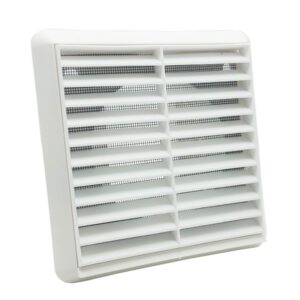
Every louvred ducting grille does two jobs at once. On the front, angled slats set at roughly 30 to 45 degrees let the air your extractor fan pushes out escape freely, while stopping wind driven rain, leaves and debris from working their way back into the duct. On the back, the spigot is what turns a simple vent cover into a ducting grille rather than a wall vent.
The spigot is usually a round tube moulded to a standard ducting diameter, either 100mm or 150mm, though some grilles use a shaped spigot for flat ducting. The duct pushes onto or into the spigot with a firm, snug fit, and the join can be sealed with a bead of silicone for a weathertight, draught free result. This is different to a wall louvre vent, which typically has a plain flanged edge set into a cored hole with no ducting connector at all. If your extractor fan or cooker hood is ducted through a wall, you need a grille with a spigot, not a standard wall louvre. The housing is just a vent cover with no electrical parts, so the same spigot design works equally well on ducting from an electric extractor fan or from gas appliance ventilation.
Step by Step: Fitting a Louvred Ducting Grille
Fitting a louvred ducting grille is a job most competent DIYers can manage in an afternoon.
- Measure and cut the ducting. Work out the run from your extractor fan or cooker hood outlet to the outside wall, allowing for any bends, and cut the ducting to length.
- Core or cut the wall opening. Drill or core a hole through the external wall to match the diameter of your ducting, either 100mm or 150mm.
- Push the spigot onto the ducting. Fit the spigot on the back of the grille into or over the end of the ducting. For a fully weathertight, draught free joint, run a bead of silicone around the connection before pushing it home.
- Feed the assembly through the wall. From inside, feed the duct and grille assembly through the cored hole until the grille sits flush against the external wall face.
- Fix the outer flange. Screw the grille's outer flange to the wall using fixings suitable for your wall type, such as masonry plugs for brick or render.
- Check the slat orientation. The louvre slats should face downward and outward so rainwater sheds away from the grille and off the wall, rather than tracking back into the ducting.
- Connect the internal end. Back inside, connect the other end of the ducting to your extractor fan or cooker hood outlet, sealing with silicone or duct tape if a fully airtight run is needed.
A useful trick is to dry fit the whole run before drilling the wall, holding the grille and ducting up against the intended position to confirm hole size and duct length before you core anything.
Choosing Between 100mm and 150mm
Ducting grilles for domestic use come in two spigot sizes, and the right one depends on what is on the other end of the duct.
100mm (4 inch) is the standard size for bathroom extractor fans and smaller kitchen extraction, such as an integrated cooker hood or a compact unit converted to duct outside. Most bathroom fans are built around a 100mm outlet, so a matching 100mm grille is the natural choice. Our Securlec inlet/outlet multi fit fixed grill in white, 100mm suits this kind of job, and also comes in brown and terracotta.
150mm (6 inch) is the size for larger kitchen extractor hoods and higher capacity ventilation, particularly on bigger kitchens, island hoods or any appliance rated for a higher extraction rate. Pushing a high volume of air through an undersized 100mm grille restricts airflow, so matching the grille to the appliance's rated outlet matters. Our Securlec inlet/outlet fixed louvre grille in grey, 150mm and the Manrose fixed grill with 6 inch spigot in grey are both built for this heavier duty end of the range. If unsure which size you have, measure the diameter of your existing ducting or check the rating plate on your fan or hood.
Multi Fit Grilles: Round vs Square Ducting Compatibility
Not every ducting run uses round pipe. Kitchen extractor hoods sometimes use flat or rectangular ducting to fit inside a shallow cupboard void, and this is where a multi fit ducting grille earns its keep. A multi fit grille has a spigot designed to accept either round or square/flat ducting, rather than being moulded for one shape only.
This flexibility is useful on retrofit jobs, where you may not know the exact shape of ducting hidden in the wall until you open things up, or where you are switching from round to flat ducting as part of an upgrade. Rather than sourcing a specific grille for whichever shape turns up, a multi fit grille such as our 100mm range gives you one part that works either way. If you already know your run is round ducting and unlikely to change, a dedicated round spigot grille such as the Manrose 150mm grey option does the same job just as well. Multi fit is really about covering your options when there is any doubt.
Colour Options and Matching Your Exterior
A ducting grille sits on the outside of your house permanently, so getting the colour right matters as much as getting the size right. The four colours most commonly stocked are white, brown, grey and terracotta, each aimed at a different exterior finish.
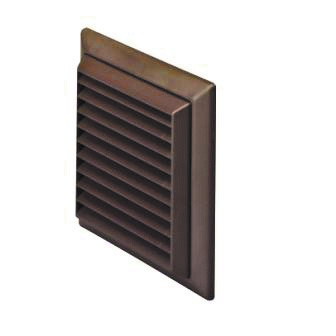
White is the natural match for uPVC fascias, soffits and light coloured render. Brown works well against darker brickwork and stained timber cladding. Grey gives a neutral, contemporary finish for render in grey tones or anywhere you want the grille to blend in. Terracotta is the choice for red brick properties and clay tile roofing, where a white or grey grille would otherwise stand out.
Check a sample or product photo against your actual brickwork or fascia colour before ordering, since brick tones vary between properties. The grille often sits at eye level, particularly on single storey extensions, so a colour that blends in rather than fights with the wall makes a noticeable difference to how finished the job looks.

Whatever colour and size you land on, our full louvre vent collection is a good place to compare ducting grilles alongside standard wall louvre vents side by side, checking dimensions and spigot sizes before you buy.
Frequently Asked Questions
What is the difference between a louvre grille and a standard wall louvre vent?
A louvre grille built for ducting has a spigot on the back that connects onto the end of a ducting pipe, whereas a standard wall louvre vent has a plain flange set into a cored hole with no duct connection at all. If you are venting an extractor fan through ducting, you need the spigot version.
Can I use the same ducting grille for a gas appliance and an electric extractor fan?
Yes. The grille is just a vent cover with no electrical parts, so the same louvred ventilator works equally well on ducting from an electric extractor fan or from gas appliance ventilation, as long as the spigot size matches your ducting diameter.
Do I need to seal the spigot to the ducting with silicone?
Not always, since the spigot is designed for a snug push fit, but a bead of silicone around the joint gives a fully weathertight, draught free connection and is recommended if the run is exposed to the elements or you want to stop whistling in windy conditions.
Which way should the louvre slats face once the grille is fitted?
The slats should face downward and outward so rainwater sheds off the grille and away from the wall, rather than running back into the ducting. Getting this orientation right is one of the most common things people get wrong, so check it before you screw the flange down for good.
