


Few kitchen frustrations are as small yet as constant as opening the drawer and finding every tea towel damp, greasy or already in the wash. It happens in almost every household at some point. Usually it's not down to bad habits at all; it just means there aren't enough tea towels in rotation to begin with.

Why You Keep Running Out of Clean Tea Towels
Tea towels get used for far more than drying dishes. In a typical day they might dry hands, wipe down worktops, line a bowl of rising dough, cover food, or mop up a spill. Each job usually leaves the towel damp or dirty afterwards, so it can't be reused straight away.
If a household only owns two or three tea towels, at least one is almost always in the laundry basket rather than the drawer. That's the moment people reach for kitchen roll or a bath towel instead, which isn't ideal and is easily avoided.
It's a small thing, but it adds up over a week. Every time you can't find a clean towel, you either reuse a damp one, which doesn't dry anything properly and can spread bacteria around, or you improvise with something that wasn't designed for the job. Neither is a big deal once. As a daily pattern, though, it's a clear sign the kitchen simply doesn't have enough towels to cover normal use.
How Many Tea Towels Do You Actually Need?
As a general rule of thumb, most households do best with 4 to 6 tea towels in active rotation. That's enough to always have at least one clean and dry one to hand, while the others are being used, drying out, or waiting for a wash.
A few things push that number higher:
- Larger families generate more washing-up and more hand-drying, so 6 to 8 is more realistic.
- Households that cook from scratch regularly get through towels faster, since they're used for everything from draining pasta to handling hot pans.
- If you only do laundry once or twice a week, you'll want a bigger buffer so you're never caught short between washes.
Smaller households or people who eat out often can usually manage on the lower end of that range. Whatever the exact number, "how many tea towels do I need" almost always has the same answer: enough that you're never down to your last one.
It's also worth splitting your towels by job rather than treating them all the same. Many households keep one or two towels strictly for drying hands and dishes, and a separate one or two for wiping surfaces or handling raw food. This isn't essential, but it does mean your best drying towels stay in good condition for longer, since they're not also being used to mop up spills.
Why a Set Beats Buying One at a Time

It's tempting to pick up a single tea towel here and there when you spot one you like. But buying a proper set solves the rotation problem in one go. Instead of slowly building up a mismatched pile over months, you get a full, usable rotation straight away.
A multipack, like an eight-pack of cotton tea towels, also means every towel in your kitchen is made from the same absorbent material and washes and wears at roughly the same rate. That makes it much easier to retire them as a batch later on, instead of ending up with odd towels at different stages of their life. You can browse the full tea towel collection to see the range of sets and multipacks available.
How to Store and Display Tea Towels So They Actually Dry
Where you keep your tea towels matters almost as much as how many you own. A damp towel folded up in a closed drawer won't dry properly between uses, and that's how musty smells creep in.
Folding for the drawer
If you're storing tea towels in a drawer, fold them loosely rather than tightly, and try not to overfill the space. Loosely folded towels get some air circulation, which helps a slightly damp one finish drying rather than sitting in a folded, airless stack.
Hanging on an oven rail or hook
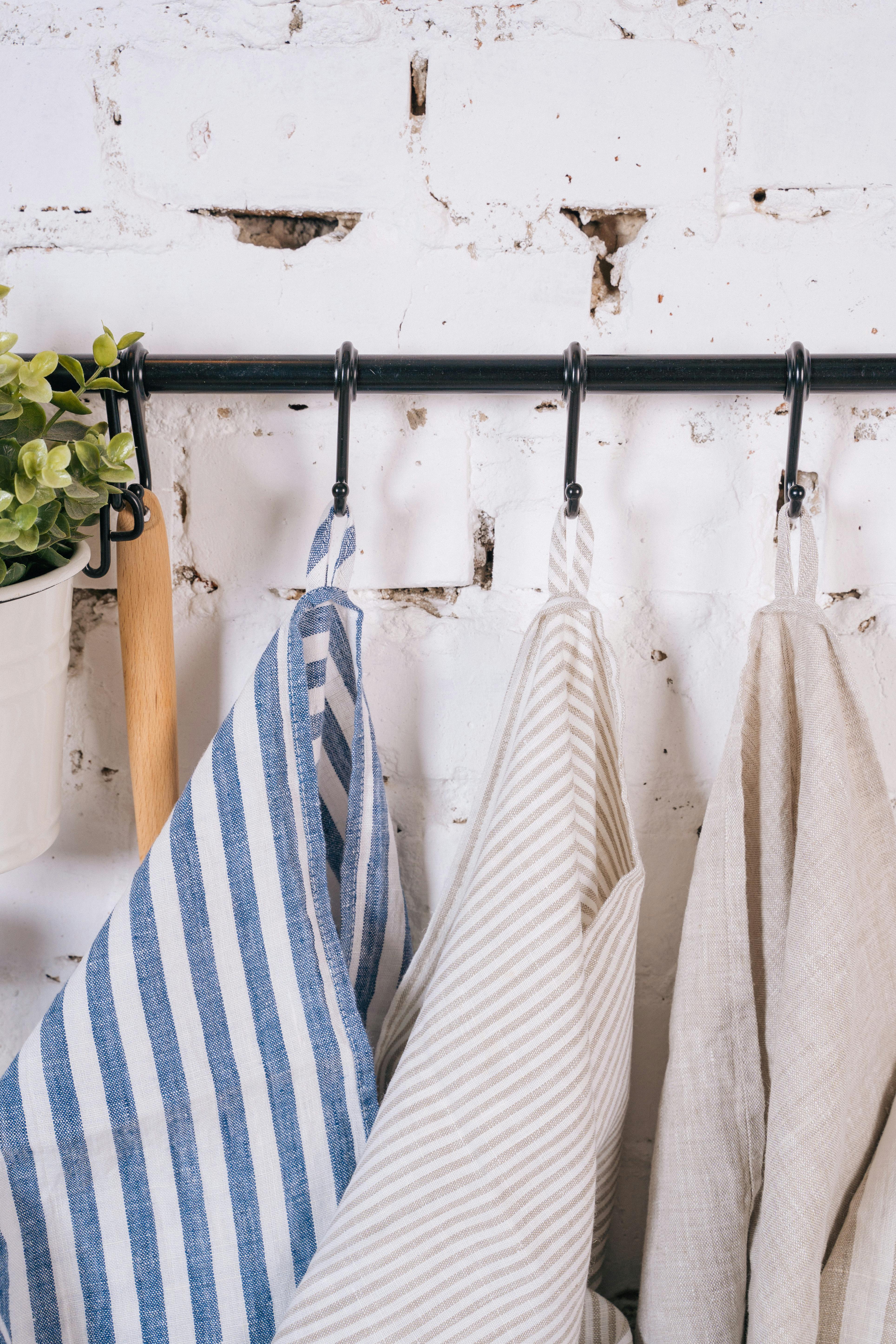
Hanging is generally the best option for a towel that's currently in use. An oven door rail is the classic spot, but it only really works well for one or two towels at a time. Add any more and they won't get enough air between them to dry.
If you want to know how to display tea towels without cluttering the oven rail, a wall-mounted rack solves this neatly. Something like a four-hole tea towel holder lets several towels hang side by side with space between them, so each one dries fully rather than staying damp against its neighbours.
Clips for cupboard doors and rails
Small hanging clips are another practical option, particularly if you're short on wall space. A set of tea towel clips can be fixed to a cupboard door, drawer front or rail, giving each towel its own spot to hang and air out rather than being bundled together.
Keeping spares out of the way
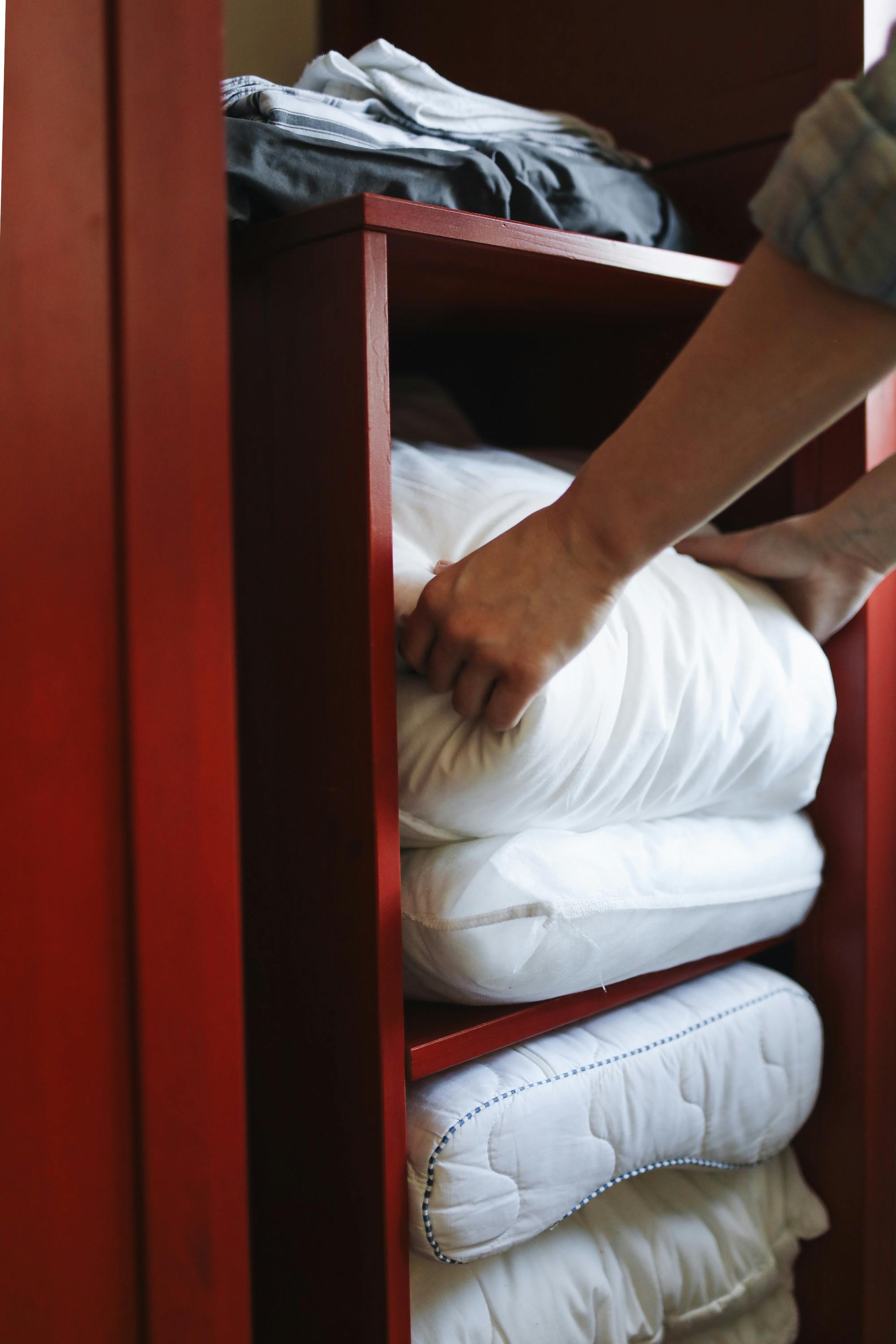
Not every towel in your rotation needs to be within arm's reach at all times. Keep one or two on active duty, hanging on a rail, hook or holder, and store the rest folded flat on a shelf or in a drawer until they're needed. This keeps the kitchen looking tidy rather than cluttered with towels, while still giving you a quick swap-in the moment the one in use gets damp or dirty.
How Often Should You Actually Replace Your Tea Towels?
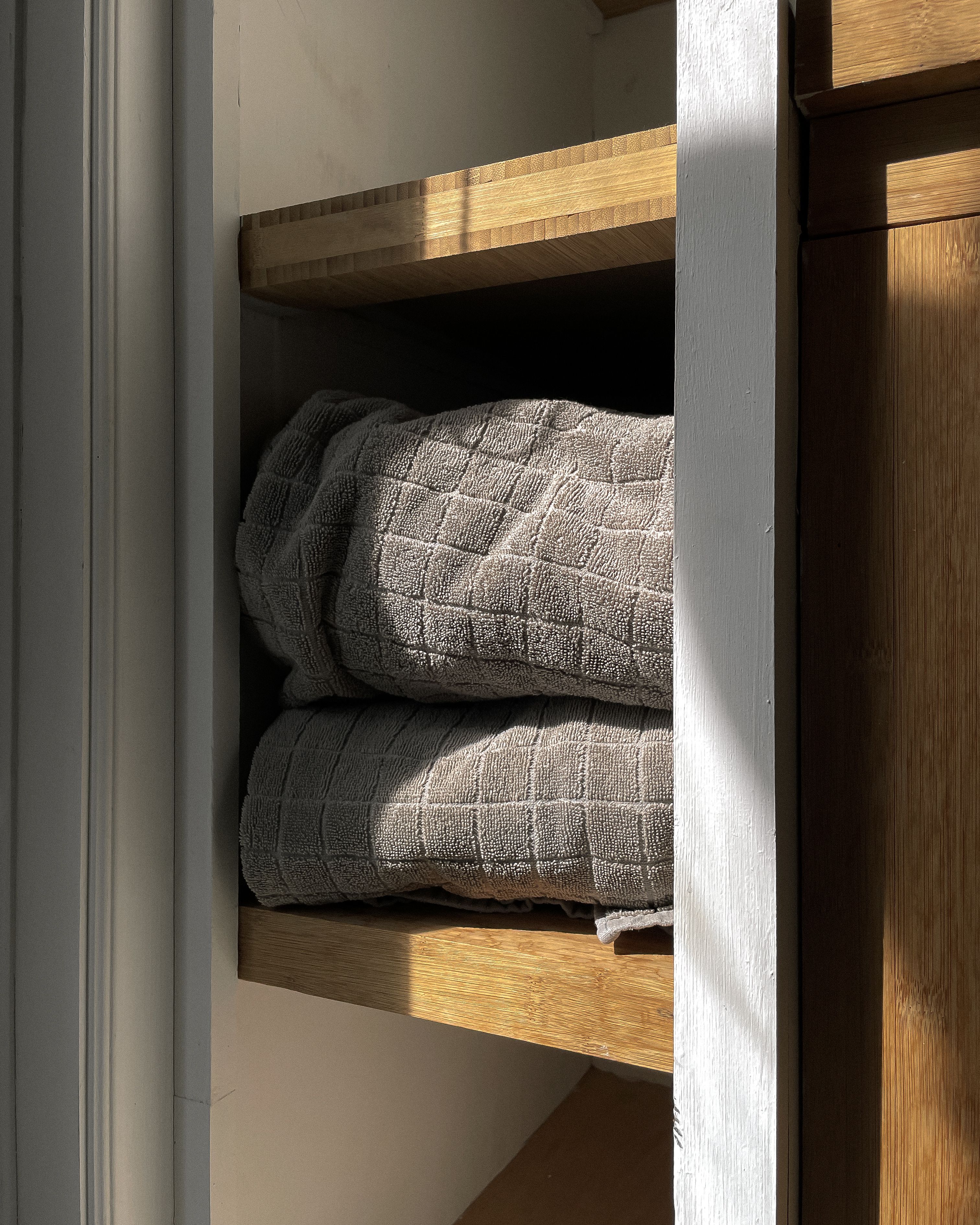
Even with good storage habits, no tea towel lasts forever. Frequent washing at high temperatures gradually breaks down the fibres. Eventually replacing them becomes more sensible than continuing to patch on with towels that aren't doing their job.
A few clear signs it's time to retire a tea towel:
- It's gone thin or threadbare. Once the fabric wears down, it holds far less water and just pushes moisture around rather than absorbing it.
- It's stopped absorbing properly. If water beads on the surface instead of soaking in, the fibres are worn out or clogged with detergent residue.
- It has a smell that won't wash out. A persistent musty or sour smell that survives a hot wash usually means bacteria has worked its way into the fibres for good.
Most households find their tea towels need replacing every few months to a year, depending on how often they're used and washed. Rather than replacing one at a time, it's often easier to retire the whole rotation together and start fresh with a new set. That's exactly where buying in a multipack pays off again.
Washing habits make a real difference too. A hot wash, ideally 60°C, clears bacteria and food residue far better than a cool, quick cycle, which is part of why towels washed only on a low temperature tend to smell sooner. If smells come back within a day or two of washing, that's often a sign the towels themselves have reached the end of their useful life rather than a washing problem.
Frequently Asked Questions
How many tea towels do I need for a family of four?
Most families of four are comfortable with 6 to 8 tea towels in rotation, especially if you cook regularly or only do laundry a couple of times a week. This gives everyone access to a clean, dry towel without relying on doing an extra wash mid-week.
How often should you change tea towels day to day?
As a habit, swap a tea towel for a fresh one every one to two days, or sooner if it's been used for raw meat, spills, or is visibly damp. Having enough towels in rotation makes this easy to keep up without extra laundry loads.
Can tea towels go in the tumble dryer?
Most cotton tea towels can be tumble dried on a low heat, which also helps kill off bacteria that cause musty smells. Check the care label first, as some thinner or decorative towels are better left to air dry.
Is it worth buying a tea towel set instead of individual towels?
Yes, for most households a set of tea towels works out more practical than buying single towels here and there. A set gives you a full, matching rotation from day one, rather than gradually collecting odd towels of different ages and absorbency over time.
Getting your tea towel rotation right is a small change, but it removes one of those little daily kitchen frustrations for good. Choose a set that suits your household size, give each towel somewhere proper to hang or sit while it dries, and replace them as a batch once they've done their job.
