


One of the most common questions we hear about Patio Magic!® is a simple one: will it actually work on my surface? It's a fair question, because outdoor surfaces are not all the same. A tarmac driveway reacts differently to a treatment than a natural stone patio does, and a dense porcelain tile is a world away from a porous piece of Indian sandstone. So rather than give a blanket yes to everything, we've gone surface by surface through the questions we're asked most often - tarmac, block paving, sandstone, porcelain tiles and even roof tiles - and given you the honest answer for each, based on what the manufacturer, Evergreen Garden Care UK Ltd, actually confirms.
Patio Magic!® uses benzalkonium chloride as its active ingredient, which breaks down the cell structure of green algae, moss, lichen and black mould on hard outdoor surfaces. It doesn't bleach or scrub anything away; it's applied and left to work so the growth dies off and washes away naturally over the following days and weeks. That interaction between the treatment and a surface's porosity and finish is what determines suitability, so keep it in mind as we go through each surface below.

Can you use Patio Magic on tarmac and driveways?
Yes. Tarmac driveways are one of the surfaces Patio Magic!® is specifically formulated and sold for, listed by the manufacturer as a target surface alongside patios and paths. Tarmac is particularly prone to green algae and black mould building up in shaded, damp corners or under trees, and because it's walked and driven on constantly, that build-up can turn a dull grey slick before you know it. Whether you use the concentrate, diluted at 1:4 for a normal build-up or 1:9 for lighter, routine treatment, or reach for the ready-to-use spray, the process is the same: apply to a dry driveway when no rain is forecast for five to six hours, cover the area evenly with a watering can, pump sprayer or trigger spray, then leave it - no scrubbing or rinsing needed. Algae and mould should visibly reduce within two to four days, moss and lichen take a little longer at one to two weeks, and results tend to last for months.
If your driveway is large, the Patio Magic Patio Cleaner Concentrate 5L covers more ground per bottle and works out convenient for driveways as well as adjoining paths.
Can Patio Magic be used on block paving?
Yes, block paving is another surface the manufacturer specifically lists as suitable, right alongside patios and paths. Block paving throws up its own particular challenge because of the joints between the blocks, often filled with sand or a jointing compound. Moss loves to establish itself in these narrow gaps, where moisture sits longer than on the flat face of each block, and once it takes hold it can spread visibly across the whole driveway. The same application method applies here: dry surface, no rain forecast for five to six hours, even application, then leave it to work without scrubbing or rinsing. Because Patio Magic!® isn't a pressure wash and doesn't rely on abrasion, it won't disturb the jointing sand the way a jet wash can, which is one reason it's a popular choice for block paving over more aggressive mechanical cleaning.
For smaller driveways, paths or a single area of block paving, the Patio Magic Patio Cleaner Concentrate 2.5L is usually the more practical size, and you can dilute it to whichever strength matches how established the growth already is.
Can you use Patio Magic on sandstone, including Indian sandstone?
Patios and paths are Patio Magic!®'s core, primary use case, and that covers natural stone paving in general terms. Where it gets more specific is with individual stone types, and here we want to be straightforward: the manufacturer's official surface list covers "patios" broadly rather than naming every paving stone individually, including Indian sandstone, one of the most widely used stones on UK patios. Sandstone is porous, which is generally good news for a treatment like this since porous surfaces absorb and hold onto the active ingredient well. That said, porosity also means sandstone can react differently depending on its finish. A riven or textured flag, with its natural rough surface, behaves fairly predictably. A honed, polished or sealed finish is a different matter, because a sealant sitting on top of the stone changes how anything applied to it interacts with the surface, and there's a small risk of an unexpected reaction with colour or the sealant itself.
Our advice, in line with the universal guidance that applies to Patio Magic!® on any surface, is to always test a small, inconspicuous area first, particularly on honed, polished or sealed sandstone. Leave it long enough to judge the result before treating the whole patio. For a natural, riven Indian sandstone patio in typical outdoor condition, this is exactly the kind of job the product is designed for.
Can you use Patio Magic on porcelain tiles?
Porcelain tiles have become a hugely popular choice for modern patios, prized for being low-maintenance and resistant to staining, so it's no surprise this is one of the questions we get asked most. Here again, we want to give a genuinely honest answer: porcelain isn't explicitly named on the manufacturer's official list of suitable surfaces, either as confirmed or ruled out. What we can say is that porcelain is, by its nature, a dense, low-porosity, chemically resistant material, generally more resistant to reaction than natural stone. That's reassuring, but because there's no explicit manufacturer confirmation either way, we'd still recommend the same caution you'd apply to any new surface: spot-test an inconspicuous area, or better still a spare offcut tile, before treating the whole patio.
Pay particular attention to how the treatment interacts with the grout lines between porcelain tiles and any edge sealants around the perimeter, since these are typically more porous than the tile itself and may respond differently. If the test area looks fine after a few days, with no discolouration or unwanted effect on the grout, you can proceed with confidence across the rest of the patio.


Can you use Patio Magic on roof tiles?
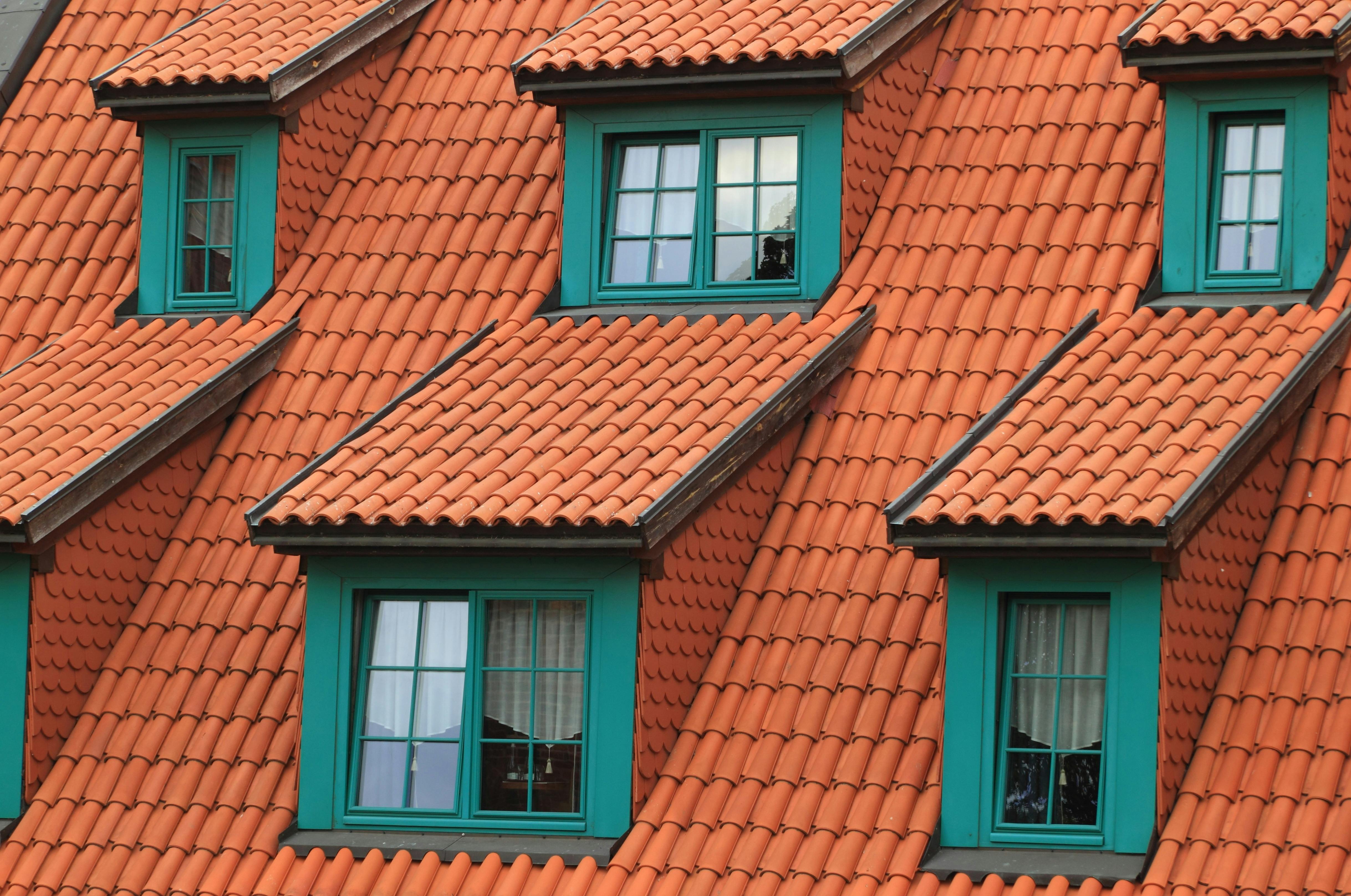
This is one where we're going to give a clear, honest steer rather than a hopeful maybe. Moss and algae on roof tiles is an extremely common problem in the UK, especially on north-facing slopes that stay damp for longer, and we understand why anyone dealing with a green-streaked roof would look at a product that clears the same growth from patios and wonder if it would do the same job up there. The reality is that Patio Magic!® is formulated and sold as a ground-level patio, driveway and path product, and roofs aren't included on the manufacturer's official surface list.
Beyond the formulation question, there's a more practical issue: treating a roof safely means working at height, with the access equipment and safety precautions that involves, none of which is covered by this product's intended use. That's a genuinely different job to spraying a patio at ground level. If moss and algae on your roof tiles are bothering you, the safer route is a specialist roof treatment product designed for that application, or a professional roof cleaning service with the right equipment to do the job without risk. It's simply not something we'd recommend stretching Patio Magic!® to cover.
Greenhouse glass and garden walls
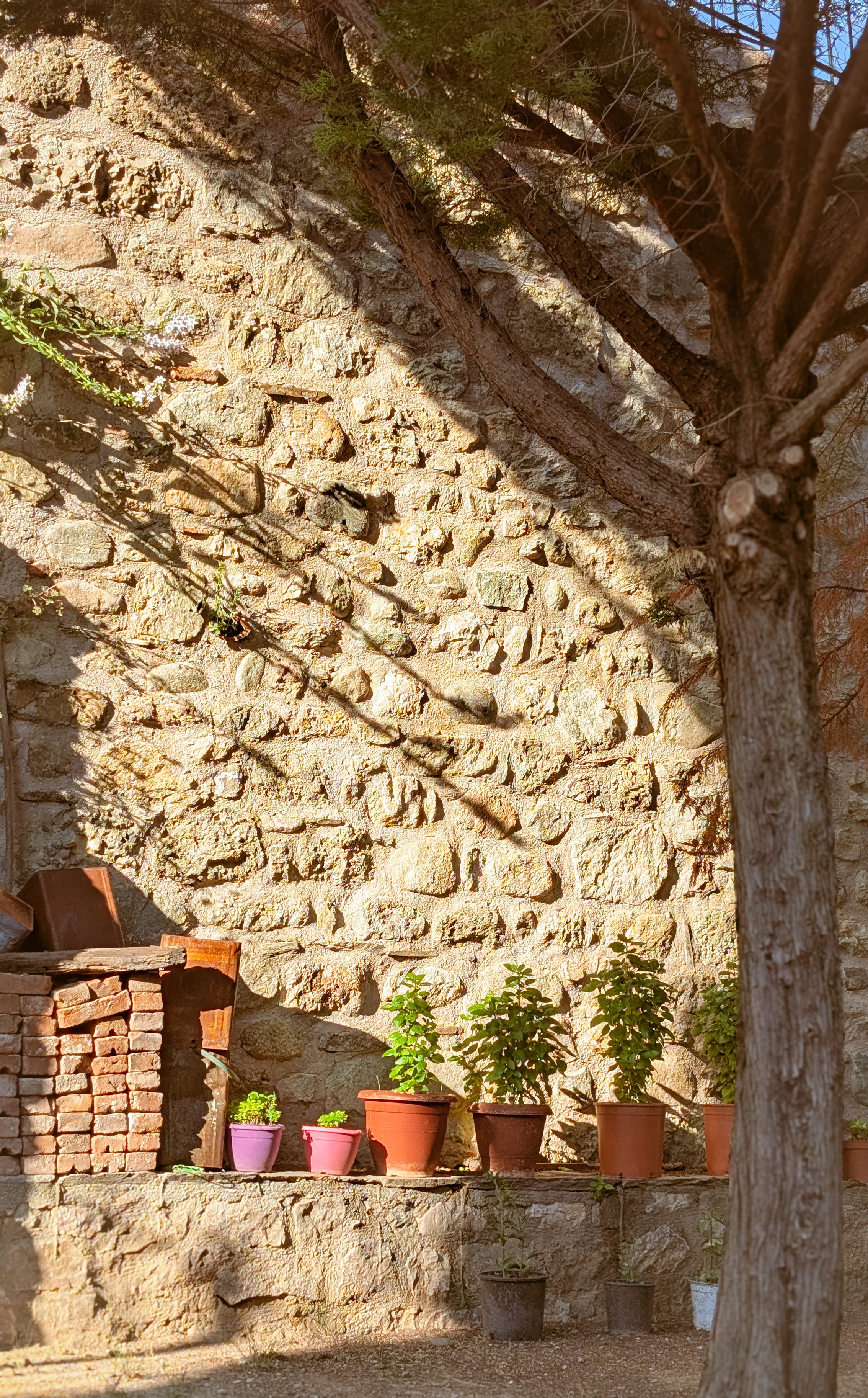
Away from paving, two other surfaces come up regularly, and both are confirmed as suitable by the manufacturer: greenhouse glass and garden walls. Greenhouse glass can develop a green film that blocks light from reaching plants inside, which matters far more than it might on a purely decorative surface, since reduced light directly affects growth. Garden walls, meanwhile, often pick up the same green algae and black mould you'll find on a patio, particularly on shaded, north-facing sections or anywhere water tends to run down and sit. The application principle is identical to everything above: a dry surface, no rain forecast for five to six hours, an even coat, then leave it to work without scrubbing or rinsing.
A few safety points that apply to every surface
Whichever of these surfaces you're treating, the same handling advice applies. Keep pets and children off the treated area until it's dry, which generally takes around five to six hours. The concentrate can cause skin and eye irritation, so gloves and eye protection are sensible when handling and diluting it, and it's very toxic to aquatic life, so take care to keep it away from ponds, streams and drains during application.
If you're weighing up which product suits your job, the full Patio Magic range includes the concentrate in two sizes for larger areas where dilution flexibility matters, and the Patio Magic Ready To Use Spray for smaller jobs, walls or greenhouse glass where a pre-mixed, grab-and-go option is easier. Match the product to the surface, test first wherever we've flagged it, and give it the time it needs to work, and you'll get the same result whether you're treating a tarmac driveway, a run of block paving, a sandstone patio or a garden wall.
